


The holidays are supposed to be a time of celebration, family gatherings, and making memories. But for families dealing with a loved one’s substance abuse, Thanksgiving, Christmas, and New Year’s can bring something entirely different: worry, uncertainty, and the realization that a problem may be more serious than anyone wanted to believe.
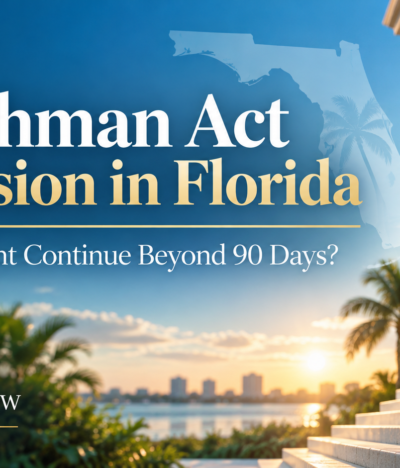
For some Florida families, understanding the Marchman Act during the holidays becomes especially important when a loved one refuses treatment.
A son who hasn’t been home in months arrives at Thanksgiving dinner noticeably impaired. A spouse promises to stop drinking before Christmas but continues to struggle. A parent notices that their adult child has lost weight, become withdrawn, or is behaving in ways that seem completely out of character.
These situations can leave families asking a difficult question:
What can we do when someone we love clearly needs help but refuses to get treatment?
In certain circumstances, Florida’s Marchman Act may provide a legal option.
Marchman Act During the Holidays: Recognizing the Warning Signs
Substance use disorders don’t follow a calendar. However, the holidays can create circumstances that bring existing problems into sharper focus.
Families who rarely see one another may suddenly spend several days together. Changes in behavior that weren’t obvious during occasional phone calls or text messages may become difficult to overlook in person.
Holiday gatherings can also introduce additional stress, financial pressures, emotional challenges, and opportunities for substance use.
For families already concerned about a loved one, certain behaviors may raise additional questions:
- Arriving at family gatherings intoxicated or appearing impaired
- Disappearing for extended periods without explanation
- Becoming unusually withdrawn, agitated, or unpredictable
- Neglecting personal hygiene, responsibilities, or basic needs
- Experiencing unexplained financial problems
- Making repeated promises to stop using drugs or alcohol without following through
- Continuing substance use despite serious consequences involving health, employment, or relationships
No single behavior establishes that someone has a substance use disorder. However, a pattern of concerning changes may indicate that a professional evaluation is needed.
The challenge becomes even greater when the person refuses to acknowledge that a problem exists.
What Happens When a Loved One Refuses Treatment?
One of the most difficult realities families face is that an adult generally has the right to make personal medical decisions, including declining treatment.
A parent cannot ordinarily require an adult child to enter rehabilitation simply because the family believes treatment would be beneficial. Likewise, a spouse cannot automatically compel another adult to seek substance abuse treatment.
But Florida law recognizes that severe substance abuse impairment can sometimes interfere with a person’s ability to recognize the need for help or make rational decisions about treatment.
That is where the Marchman Act may become relevant.
The Marchman Act, found in Chapter 397 of the Florida Statutes, establishes legal procedures for involuntary substance abuse assessment and treatment when specific statutory requirements are satisfied.
It is not intended to resolve ordinary family disagreements or force treatment simply because someone is making unhealthy choices.
Instead, it provides a legal process for addressing circumstances involving qualifying substance abuse impairment and serious concerns about the individual’s ability to care for themselves or the risk of harm.
When Can Florida’s Marchman Act Be Used?
Under Florida Statute § 397.675, involuntary admission requires more than proof that a person is using drugs or alcohol.
There must be a good-faith reason to believe that the individual is substance abuse impaired, or has a substance use disorder with a co-occurring mental health disorder, and has lost the power of self-control concerning substance abuse.
The law also requires additional circumstances involving impaired judgment and inability to appreciate the need for services, or qualifying risks of neglect or harm.
Importantly, refusing treatment alone does not establish that someone lacks the judgment necessary to make decisions about receiving services.
The circumstances must satisfy the applicable legal requirements.
For a court-ordered involuntary treatment petition, Florida law also requires qualifying recent protective custody, emergency admission, or assessment circumstances.
An attorney can help determine whether the available facts support pursuing a Marchman Act proceeding and what steps may be necessary before a treatment petition can move forward.
Do Families Have to Wait Until Something Terrible Happens?
This is one of the most important questions families ask.
Parents and spouses sometimes believe they must wait for an overdose, arrest, serious injury, or other devastating event before exploring legal options.
That is not necessarily true.
Florida’s Marchman Act does not require every individual to have suffered an overdose or been arrested before the law can apply.
However, it does require evidence satisfying the statutory criteria. Concern alone, even when entirely understandable, is not enough.
For example, evidence involving severe impairment, inability to appreciate the need for treatment, serious self-neglect, or qualifying threats of harm may be relevant to determining whether legal intervention is appropriate.
The specific circumstances matter.
Rather than waiting for an emergency, families who are seeing serious warning signs can consult with a qualified treatment professional or an attorney familiar with Florida’s Marchman Act.
Understanding the legal requirements early may help families make informed decisions about what to do next.
Can You File a Marchman Act Petition During the Holidays?
The need for substance abuse treatment does not disappear because it is Thanksgiving, Christmas, or New Year’s.
However, court holidays, filing procedures, treatment facility availability, and the nature of the requested relief can affect how quickly a matter proceeds.
Families should not assume that every Marchman Act petition will receive an immediate hearing or that filing a petition guarantees admission to a treatment facility.
The appropriate process depends on the circumstances, including whether an emergency exists and whether the requirements for involuntary assessment or treatment have been met.
Planning ahead can be particularly important during the holiday season, when court schedules and treatment resources may be affected.
If someone is experiencing a suspected overdose or another immediate medical emergency, families should seek emergency assistance rather than wait for a court proceeding.
What If Your Loved One Is Struggling With Both Addiction and Mental Health Issues?
Substance use disorders and mental health conditions can occur together.
A family may be concerned about alcohol or drug use while also noticing depression, severe anxiety, unusual behavior, or other potential mental health symptoms.
Florida has separate legal frameworks for involuntary mental health examinations and substance abuse services.
The Baker Act primarily addresses qualifying mental health circumstances, while the Marchman Act addresses qualifying substance abuse impairment, including certain circumstances involving co-occurring mental health disorders.
Determining which legal process is appropriate requires examining the person’s actual condition and the applicable statutory requirements.
In some situations, a professional assessment may help clarify the appropriate course of action.
What Families Can Do Before the Holiday Situation Escalates
When a family is concerned about someone’s substance use, it can be difficult to know whether to intervene, wait, or seek professional assistance.
There are practical steps families can take before making decisions about legal action.
Pay attention to patterns, not just isolated incidents. A single uncomfortable holiday gathering may not establish a serious substance use problem. Repeated episodes of impairment, neglect, dangerous behavior, or significant deterioration may provide a clearer picture.
Document specific concerns. Keep accurate records of relevant incidents, including dates, observed behavior, medical emergencies, and other circumstances that may help professionals understand the situation. Avoid speculation or exaggeration.
Explore voluntary treatment when appropriate. In many circumstances, encouraging someone to participate willingly in an assessment or treatment program is preferable to involuntary proceedings.
Understand the legal options before taking action. If voluntary treatment is refused and serious concerns remain, speaking with an attorney familiar with the Marchman Act can help clarify whether the law may apply.
Do not ignore an immediate emergency. Suspected overdose, serious medical distress, or imminent danger requires prompt emergency assistance.
The goal should be to identify an appropriate path toward care while respecting the individual’s legal rights.
How Rabideau Law Helps Families Navigate the Marchman Act
For families watching someone struggle with addiction, deciding whether to pursue involuntary treatment can be emotionally difficult.
There may be disagreement among relatives, uncertainty about the person’s condition, or concern that seeking court intervention could damage the relationship.
At Rabideau Law, we understand that these cases involve more than legal paperwork. They involve people, families, and difficult decisions about treatment.
Attorney Michael T. Rabideau assists clients with Florida Marchman Act proceedings, helping them understand the legal requirements, available options, and court process.
Our firm also represents individuals who are the subject of Marchman Act proceedings, ensuring that their legal rights and individual circumstances are properly considered.
Whether a family is seeking assistance or an individual is responding to a petition, the legal process deserves careful attention.
This Holiday Season, Don’t Ignore the Warning Signs
The holidays can be a time of joy and connection. They can also reveal difficult realities that families have been trying to manage for months or even years.
If a loved one’s substance use has become increasingly concerning, the most important step may be learning what options are available.
Florida’s Marchman Act cannot guarantee recovery, and it does not apply to every situation involving addiction. But when the legal criteria are met, it may provide a pathway to assessment and treatment for someone who is unable or unwilling to seek help voluntarily.
You do not have to wait until the situation becomes a tragedy to begin asking questions.
Rabideau Law assists families and individuals with Marchman Act matters throughout Palm Beach County and surrounding South Florida communities.
If you are concerned about a loved one’s substance use and want to understand whether the Marchman Act may apply, contact the Law Offices of Michael T. Rabideau, P.A., to discuss your circumstances and legal options.
This article is provided for general informational purposes and does not constitute legal advice. Marchman Act proceedings depend on the specific facts and applicable Florida law.