

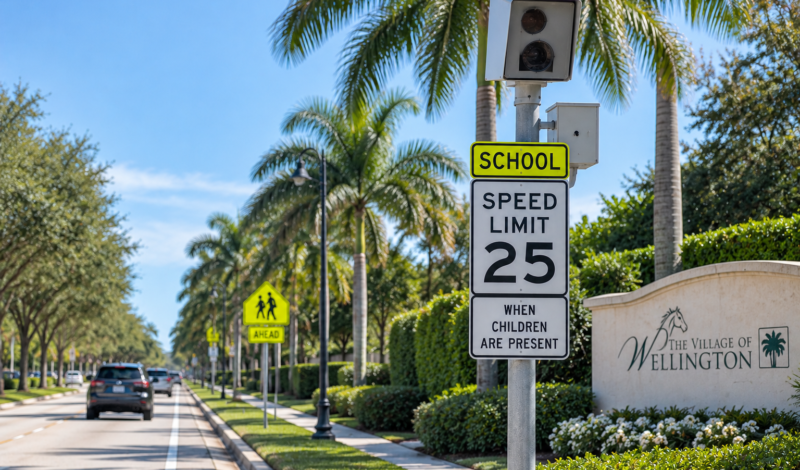

Florida School-zone speed cameras are generating thousands of tickets across South Florida—and plenty of confusion for drivers who receive them.
In Delray Beach alone, 4,945 Notices of Violation were issued between August 10 and September 18, 2026, according to WPTV. The recent rollout also exposed an important issue: equipment at Banyan Creek Elementary was not properly synchronized with the school’s flashing beacons, resulting in some notices being issued outside the designated enforcement period. WPTV reported that the affected notices were dismissed or refunded.
That raises questions we hear frequently from Florida drivers:
Does a school-zone camera ticket put points on your license? What happens if you don’t pay it? Can it turn into a Uniform Traffic Citation? And can your driver’s license actually be suspended?
The answers are not always as straightforward as the notice itself may make them seem.
Do Florida School-Zone Camera Tickets Put Points on Your License?
No.
Florida law specifically provides that points may not be imposed for speeding violations under sections 316.1895 or 316.183 when they are enforced by a traffic infraction enforcement officer through a school-zone speed detection system pursuant to section 316.1896.
Florida law also provides that these camera-enforced violations may not be used for purposes of setting motor vehicle insurance rates.
That distinction matters because a traditional speeding citation issued by a police officer can carry points. A qualifying school-zone speed-camera violation does not.
But Isn’t Speeding in a Florida School-Zone a Moving Violation?
Yes—and this is where much of the confusion begins.
Florida law treats school-zone speeding as a moving violation. Ordinarily, speeding convictions can result in points against a driver’s license.
However, Florida law creates a specific exception for violations enforced through the school-zone camera system under section 316.1896.
In other words: it can be a moving violation while still carrying zero points when it is enforced through the qualifying school-zone camera program.
How Fast Do You Have to Be Going to Get a School Zone Camera Ticket?
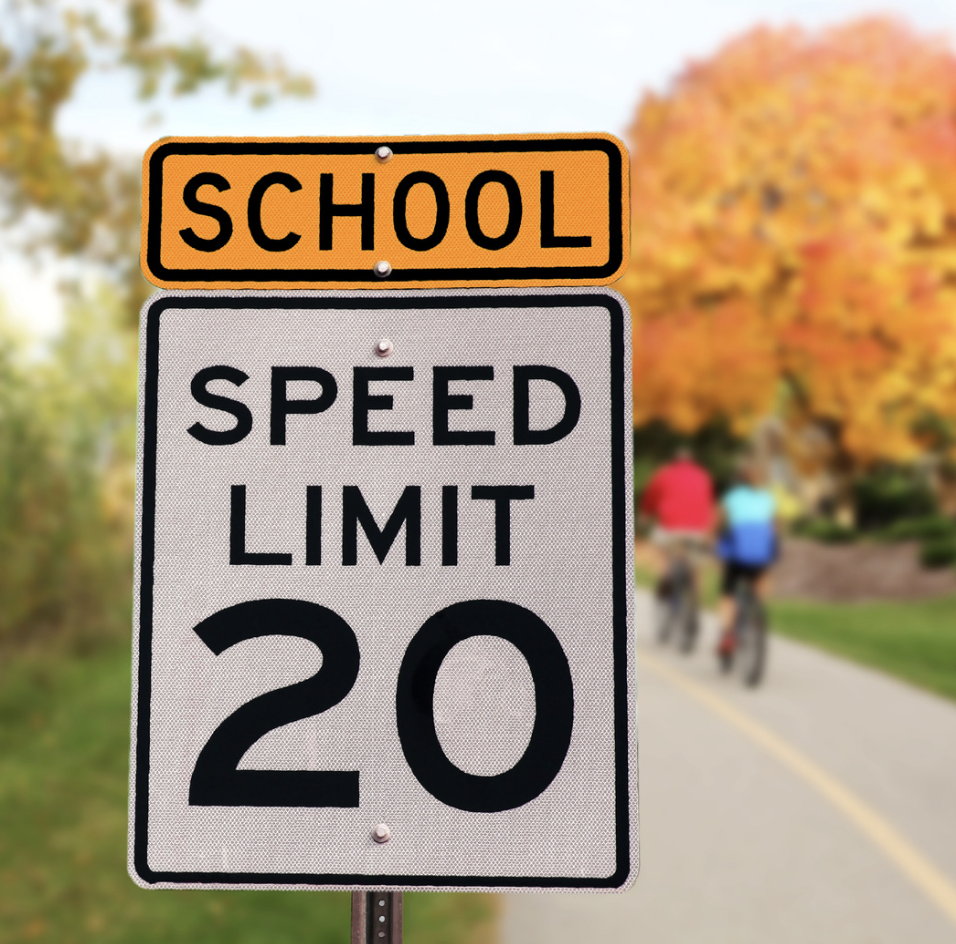
Florida’s school-zone camera law authorizes camera enforcement for vehicles traveling more than 10 miles per hour over the applicable speed limit during specified school-related enforcement periods.
For drivers, the easiest way to think about that is 11 mph or more over the applicable limit.
The authorized enforcement periods can include times surrounding breakfast programs, school arrival and dismissal, as well as portions of the regularly scheduled school session under circumstances specified by Florida law.
That means drivers should not assume cameras operate only while children are visibly arriving or leaving school.
How Much Is a Florida School Zone Camera Ticket?
The initial civil penalty for a school-zone speed-camera violation is $100.
There is not a statewide escalating fine simply because this is your second or third school-zone camera violation. Each qualifying camera violation carries the statutory $100 penalty at the Notice of Violation stage.
However, ignoring that initial $100 notice can make the situation more expensive.
Florida law gives the registered owner 30 days after the date of the Notice of Violation to take one of the permitted actions. If the matter is not resolved at the notice stage, court fees and costs can be added and a Uniform Traffic Citation (UTC) can be issued.
That distinction is important.
Notice of Violation vs. Uniform Traffic Citation
When a school-zone camera first captures an alleged violation, the registered owner generally receives a Notice of Violation.
The notice must include information such as the date, time and location of the alleged violation, the vehicle’s license plate, the detected speed and the applicable speed limit. Florida law also gives the recipient the right to review the photographic or video evidence and evidence of the vehicle’s detected speed.
At this stage, the owner generally has options that may include paying the $100 penalty, requesting a hearing, or—when applicable—submitting a statutory affidavit.
But if the notice isn’t properly addressed within the required time, the matter can progress to a Florida Uniform Traffic Citation.
Delray Beach, for example, expressly warns drivers that failure to follow the Notice of Violation options within 30 days will result in issuance of a Florida Uniform Traffic Citation.
And that’s where simply throwing the notice in a drawer can become a much bigger problem.
If My Camera Ticket Becomes a UTC, Do I Get Points?
No—not simply because it progressed to a Uniform Traffic Citation.
This is another source of confusion.
Florida’s no-points provision is tied to the way the speeding violation was enforced: through a traffic infraction enforcement officer pursuant to the Florida school-zone camera statute.
The statute does not say that the protection disappears merely because an unresolved Notice of Violation later results in issuance of a UTC.
So an eligible school-zone camera violation does not suddenly become a points violation simply because a UTC was issued.
But that does not mean the UTC can safely be ignored.
Then Why Does My Citation Say My Driver’s License Can Be Suspended?
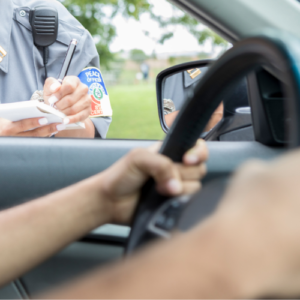
Because points and license suspensions are two different issues.
A Florida school-zone camera violation itself does not carry points under the statutory camera-enforcement exception.
However, once the matter has progressed into the traffic-court system, failure to comply with the citation or court requirements can lead to consequences involving your driving privilege.
This is sometimes referred to as a D6 suspension.
So if you receive a camera-generated UTC warning that failure to comply may result in suspension of your driver’s license, don’t assume that warning contradicts the no-points rule.
The distinction is:
The camera violation does not add points.
Failing to properly resolve the resulting traffic matter can create a separate license problem.
What If I Wasn’t Driving the Vehicle?
School-zone camera notices are initially sent to the registered owner of the vehicle because the camera identifies the vehicle through its license plate.
Florida law provides an affidavit procedure for certain situations in which the registered owner was not the person who had care, custody or control of the vehicle when the alleged violation occurred.
The important thing is not to ignore the notice simply because you weren’t driving.
Review the notice carefully and follow the procedures and deadlines that apply to your circumstances.
Can You Fight a Florida School Zone Camera Ticket?
Yes. A person receiving a Notice of Violation has the right to request a hearing, and Florida law specifically provides a process for reviewing the photographic or video evidence and the speed evidence supporting the alleged violation.
Depending on the circumstances, issues worth examining may include:
- Whether the vehicle was actually traveling at the speed alleged;
- Whether enforcement occurred during a legally authorized time;
- Whether the applicable speed limit and required signage were properly established;
- Whether the registered owner was responsible for the vehicle at the time; and
- Whether the speed detection system and enforcement process complied with Florida law.
Florida also requires school-zone speed detection systems to perform a self-test at least once every 30 days, with logs maintained, and requires an independent calibration test at least once every 12 months.
The Recent Delray Beach Camera Problem Shows Why Review Matters
The recent situation at Banyan Creek Elementary in Delray Beach provides a real-world example.
According to WPTV, RedSpeed acknowledged that the camera equipment and flashing beacons at the school were not properly synchronized. That resulted in some drivers receiving notices outside the designated school-zone enforcement period. The affected notices were reportedly dismissed or refunded.
That does not mean every school-zone camera ticket is defective. It does show why drivers should review the date, time, location, applicable speed limit and available evidence rather than assuming that automated enforcement can never contain an error.
What Happens If I Just Pay the $100 Notice?
If the matter is still at the initial Notice of Violation stage and you choose to pay it as provided by law, the camera-enforced violation does not result in driver’s-license points and may not be used for purposes of setting motor vehicle insurance rates.
Delray Beach similarly tells drivers that resolving the matter at the Notice of Violation stage has no adverse impact on the alleged violator’s driver’s license, vehicle registration or insurance.
Paying the notice, however, is not necessarily the only option. A person who believes a notice was issued incorrectly should review the hearing and affidavit options described in the notice before the deadline expires.
Are Camera Tickets the Same as Regular Florida School-Zone Speeding Tickets?
No.
This distinction is extremely important.
A police officer can still personally stop a driver and issue a traditional speeding citation in a Florida school-zone. Those citations are governed by the ordinary traffic-enforcement rules and can carry points.
Florida generally assesses 3 points for unlawful speed not exceeding 15 mph over the lawful or posted speed and 4 points for unlawful speed more than 15 mph over.
The statute then specifically carves out Florida school-zone speeding enforced through the section 316.1896 camera program from those points.
So when trying to determine the consequences of a Florida school-zone speeding citation, the first question should be:
Was this issued from a speed camera, or did a law enforcement officer personally issue the speeding citation?
The answer can materially change the consequences.
Florida School-Zone Speed Cameras in Palm Beach County
Florida School-zone camera enforcement is becoming increasingly common throughout Palm Beach County.
Wellington and Delray Beach are among the local communities using camera enforcement, and thousands of citations have already been generated. Earlier in 2026, WPBF reported approximately 5,300 citations in Delray Beach between October and May during the prior school year, with Wellington also issuing thousands of citations through its program.
The newest Delray numbers demonstrate how quickly these notices can accumulate: nearly 5,000 more notices in roughly six weeks after enforcement resumed in August 2026.
For Palm Beach County drivers, understanding the difference between a Notice of Violation, a camera-generated UTC, and a traditional officer-issued speeding citation is becoming increasingly important.
The Bottom Line
If you receive a Florida school-zone speed-camera ticket:
- An initial camera Notice of Violation is generally $100.
- Camera enforcement applies when a vehicle is traveling more than 10 mph over the applicable speed limit during an authorized enforcement period.
- A qualifying camera-enforced Florida school-zone speeding violation does not carry driver’s-license points.
- Florida law prohibits using that camera-enforced violation to set motor-vehicle insurance rates.
- Ignoring the initial notice can result in a Uniform Traffic Citation, additional court costs and potentially more serious consequences.
- A camera-generated UTC still does not automatically create points.
- Failing to comply with traffic-court requirements can potentially result in a driver’s-license suspension.
- A traditional speeding citation personally issued by a law enforcement officer is different and may carry points.
Camera evidence is not necessarily infallible. Drivers have the right to review the evidence and, when appropriate, contest the alleged violation.
Questions About a Florida Traffic Citation?
Traffic citations can become more complicated than they initially appear—particularly when a Notice of Violation has already progressed to a Uniform Traffic Citation or there is a potential issue involving a driver’s license.
At The Law Offices of Michael T. Rabideau, P.A., clients work directly with attorney Michael Rabideau and our team to understand what they’re facing, what options are available, and what needs to happen next.
Rabideau Law represents clients in traffic and criminal matters throughout Palm Beach County and South Florida, with offices serving West Palm Beach, Wellington and Boca Raton.
Call 561-820-4848 to speak with Rabideau Law.
This article is provided for general informational purposes only and is not legal advice. Laws and procedures can change, and the appropriate response to a citation depends on the specific facts and circumstances.